
The product collection
Find your next layer
of control.
From database activity to the infrastructure beneath it. Explore each product, its deployment model, and the work it helps your team do.
01 / Database activity monitoring
Vyrell
Know what happens to your data.
Investigate database activity and prepare audit evidence, without installing agents on production databases.
Read-only collection · Policy-based detection · Audit reporting
- Runs in your environment; hosted evaluation on request.
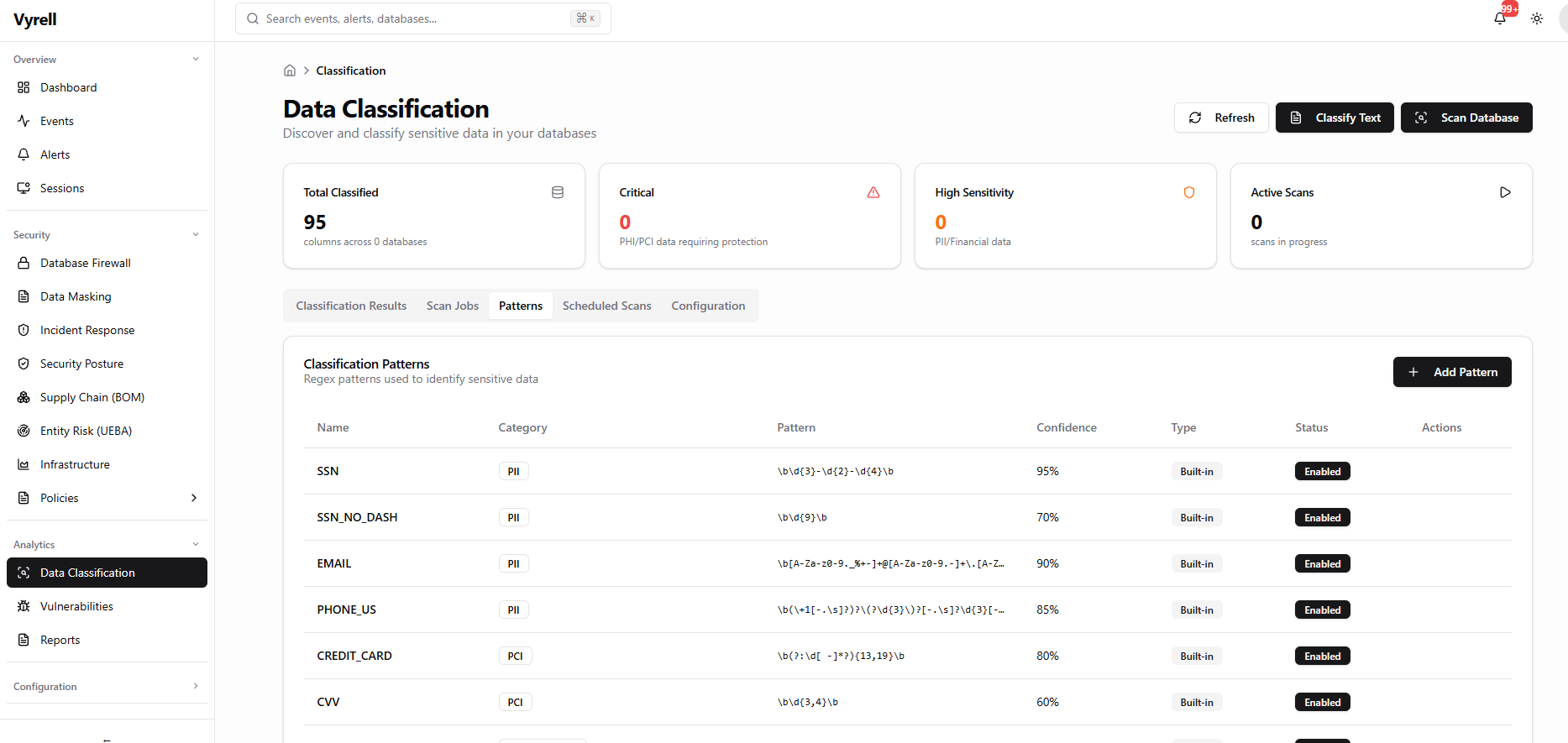
Sybase ASE and Cassandra connectors are not yet supported on Kubernetes deployments.
02 / Managed database platform
Nothi
A simpler way to run your databases.
Provision, back up, and manage databases from one Kubernetes-native control plane on infrastructure you control.
Self-service provisioning · Per-engine backups · Tenant isolation
- Kubernetes-native deployment on your own cluster.
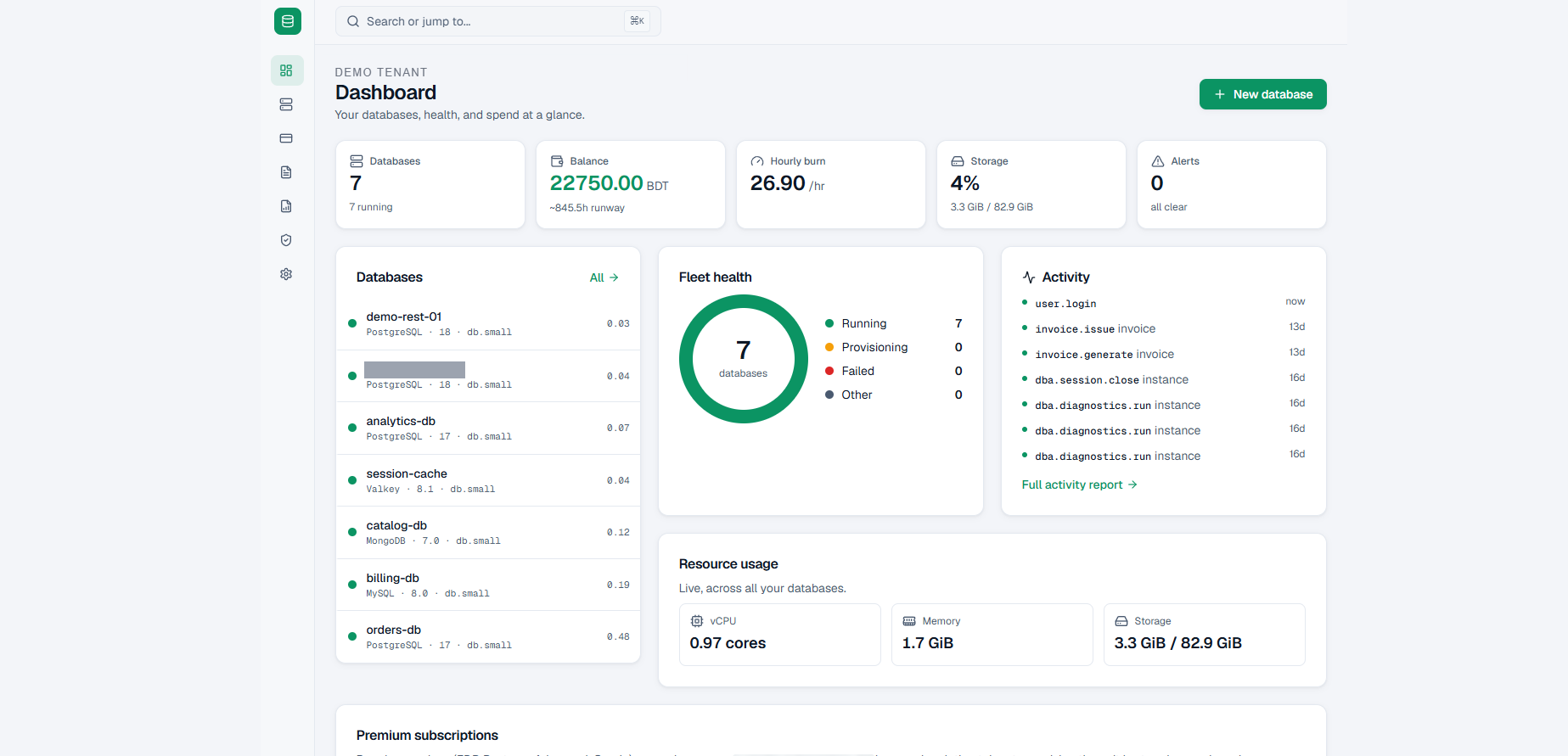
openGauss is built but not offered. Storage growth depends on the underlying storage class.
03 / Sovereign video meetings
Dorbar
Your meetings. Inside your boundary.
Schedule and host meetings with controlled access, recording, and an interface in Bengali or English.
Host moderation · Official-room recording · Bilingual interface
- Self-hosted meetings. Official-room media is protected in transit.
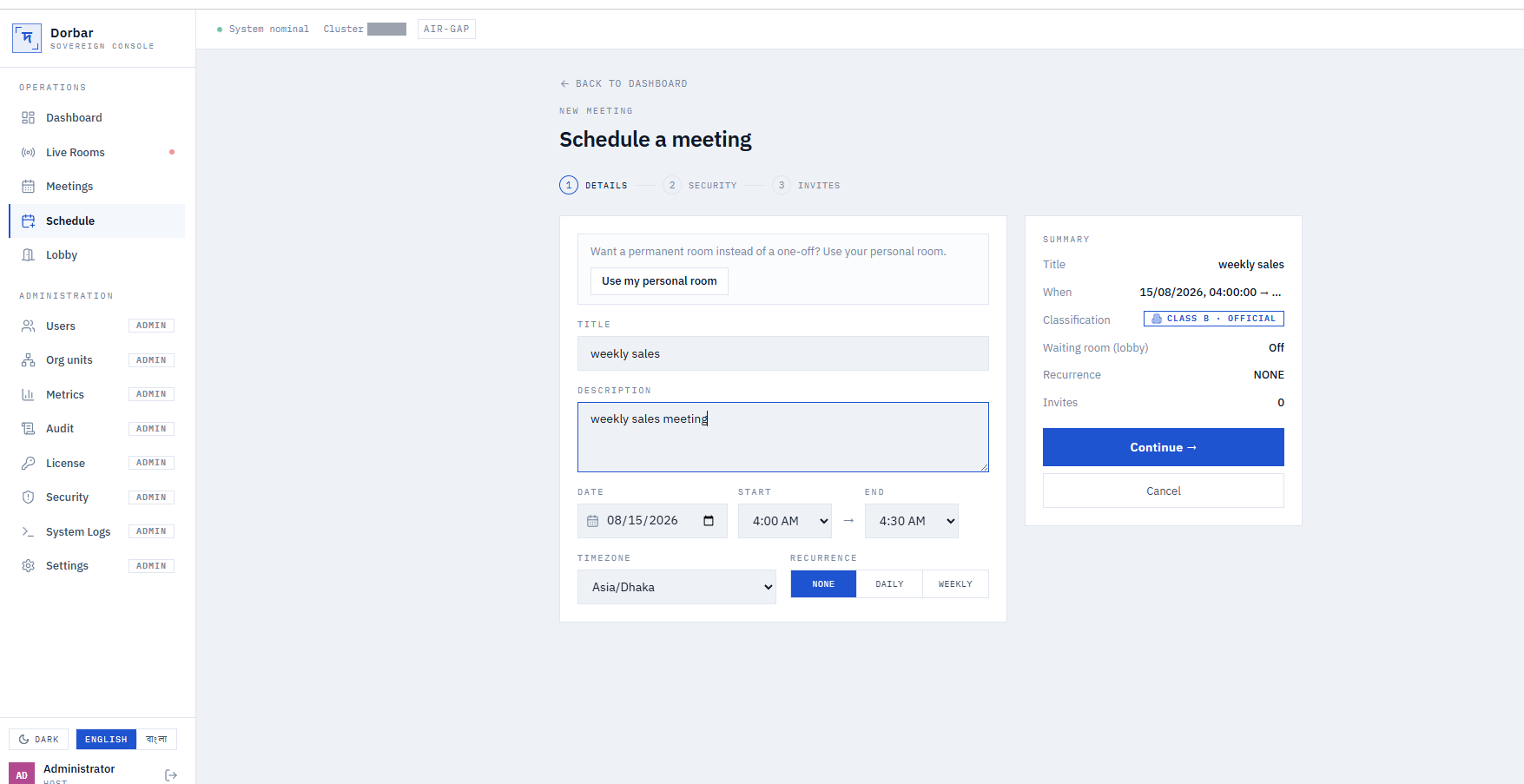
Sealed-room encryption is built but dormant, pending external review. Air-gap deployment is built, not live.
04 / Managed Kubernetes
Moncho
Operate clusters with evidence in hand.
Managed Kubernetes with tenant isolation, a signed add-on catalog, and continuous security posture evidence.
Isolation tiers · Signed add-ons · Security posture
- Operated by Vigilus Labs; in-country Bangladesh infrastructure is planned.
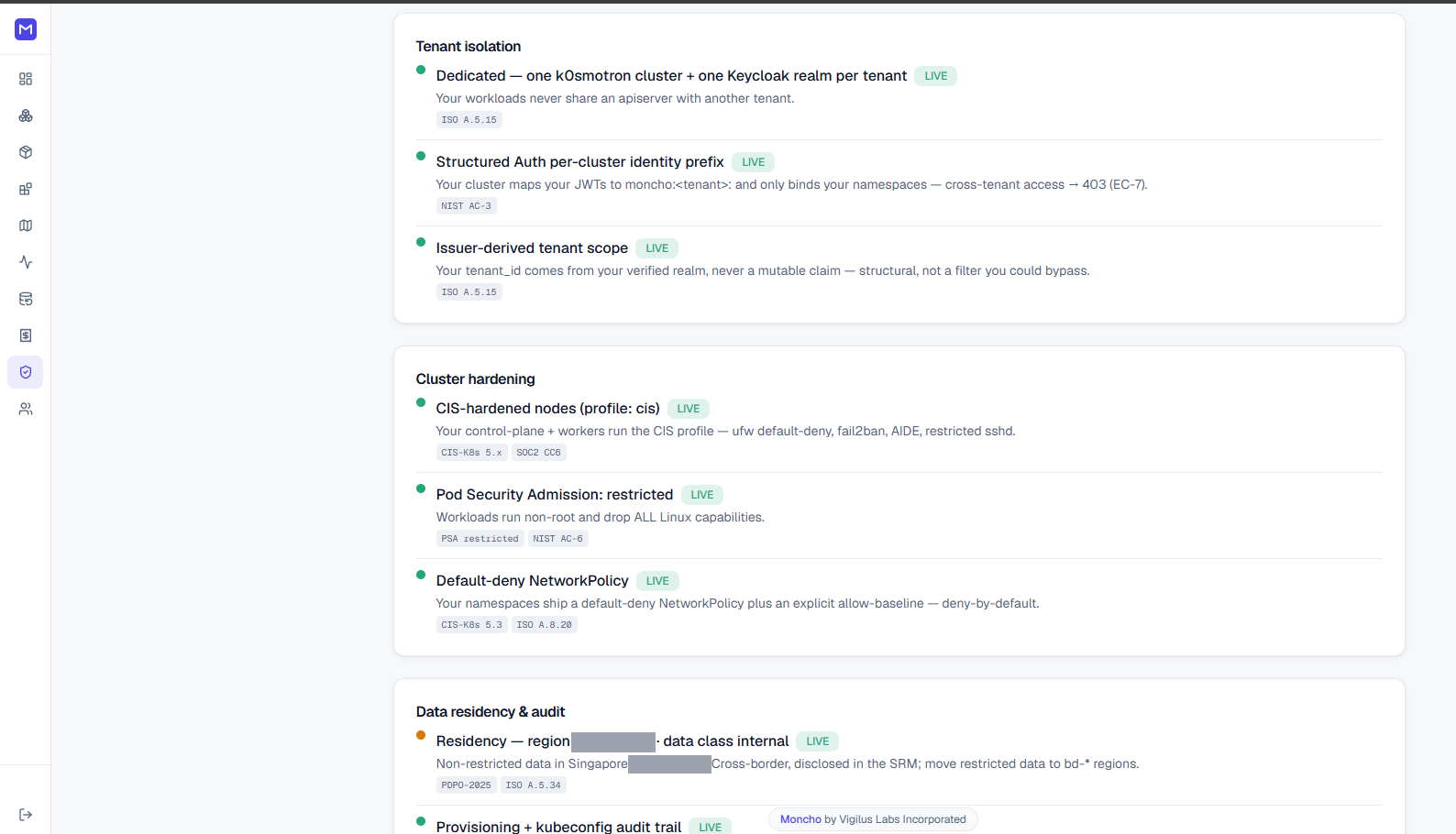
Node expansion uses pre-staged machines. No financially-backed availability SLA; OSCAL export is built, not live.
Your next step
Not sure where to start?
Tell us what you need to secure or operate. We’ll help you choose the right product to evaluate.
A conversation with the people building the product.